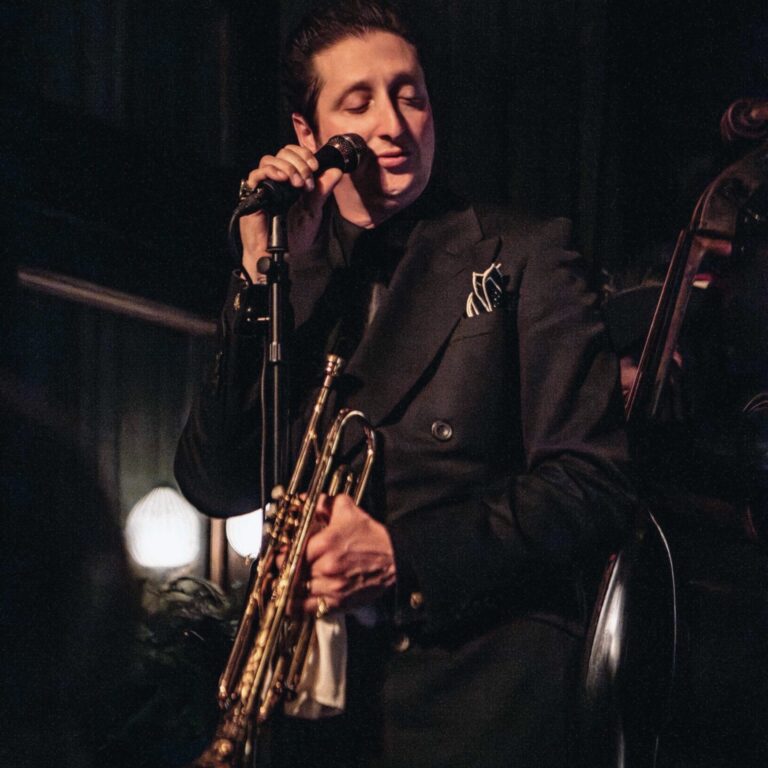
Club Room Groove with Brian Newman
Club Room goes gaga for the grammy-winning producer, bandleader, trumpeter & vocalist Brian Newman.


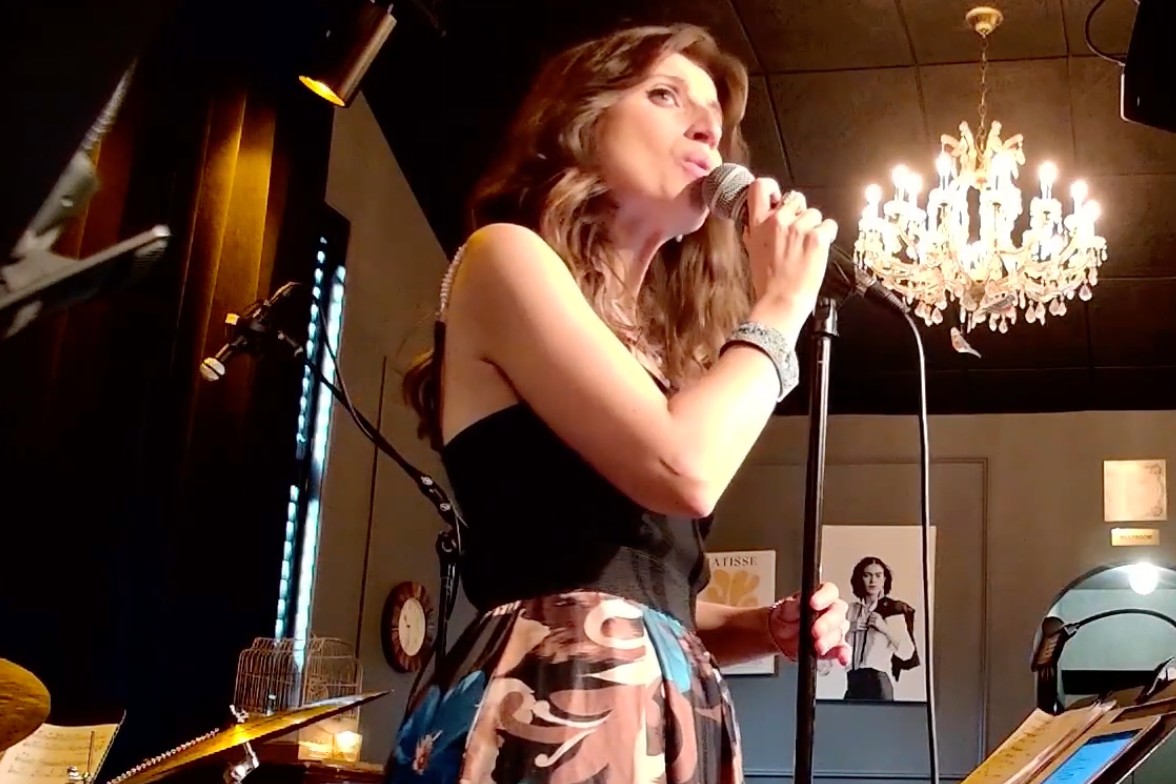
Chiara Izzi is a polymath – a gifted instrumentalist and vocalist that delivers songs in a multitude of languages and styles. Chosen by none other than legendary producer Quincy Jones as the winner of the 2011 Montreux International Jazz Vocal Competition, Izzi has brought her unique brand of world-infused jazz and song to venues big and small around the world. Club Room recently sat down with Chiara before her Brazilian Jazz Sunday debut on November 1, 2026. She talked about her early life, her music career, and what’s in store for next year.
You grew up in Italy — tell us about discovering jazz and learning how to sing it.
I grew up in Campobasso, a small town in Molise, the second-smallest region of Italy. I’ve been singing naturally since I was a little girl, but I didn’t initially set out to become a jazz singer. A high school teacher introduced me to Thelonious Monk School and encouraged me to explore jazz, which I began studying through both singing and piano. When I was 17, my first band, The Monkeys, traveled to Belgium for a jazz exchange. Meeting musicians from different backgrounds and creating music together gave me an epiphany: I wanted to travel the world through music. Looking back, that was the beginning of everything.
What kinds of things do you remember singing early on?
My first singing performance was at eight, in a church. Someone noticed I could sing in tune and asked me to perform a song during the celebration. I remember feeling a kind of spiritual connection with singing, as if I needed to express something coming from somewhere beyond myself. Growing up, I sang musical theater and songs by Italian pop singers like Giorgia, Elisa, and Mina. I wasn’t training to become a professional singer; I simply sang what I loved. Interestingly, my first musical ambition was actually to become a classical pianist. Singing developed naturally alongside it.
How did studying classical piano influence you as a musician?
Piano was my first love. I remember hearing a cousin of my father’s playing Mozart’s “Rondo alla Turca” and being so moved that I started crying. I told my dad, “I want to do this. I want to play the piano.” Classical training gave me a strong musical foundation, particularly in ear training and sight-singing. It shaped me not only as a singer, but also as a composer, influencing how I hear and approach melodies. Beyond the technical skills, though, I think classical music gave me something more fundamental: an intimate, emotional connection with music that remains central to who I am.
You won first place in the 2011 Montreux International Jazz Vocal Competition, with Quincy Jones on the jury. What was that experience like?
I still remember seeing Quincy Jones sitting right in front of me as I walked onstage to sing. He was eating French fries, but he was really watching me! [Laughs.] I was nervous at first, but then I thought, “I have this once-in-a-lifetime opportunity. I want to sing my heart out.” Winning helped me record my first album as a bandleader, and the following year I opened for Paco de Lucía at the Montreux Jazz Festival. But the most meaningful part was Quincy telling me, “Sister, you are very, very talented. You should come to the U.S.” Quincy later became an invaluable mentor, and we stayed in touch over the years. His extraordinary generosity, encouragement, and support helped me tremendously in continuing to build my international career.
On your 2013 album Motifs, you sing in English, Italian, Spanish, and Portuguese. Is it challenging to mix genres and languages?
Mixing genres and languages has always been part of my musical identity. I moved naturally between Latin music, the folk traditions of my region in Italy, American jazz, and Brazilian music. I even sang in Latin once! I never felt I had to choose one world over another; what mattered was the connection I felt with the music. Of course, singing in different languages authentically takes time and listening. Moving to New York allowed me to deepen my understanding of American and Brazilian music through the musicians around me. Interestingly, living abroad also brought me closer to my Italian roots. I began singing and writing more in Italian, discovering that sometimes being away from home helps you understand where you come from.
What is it about the Brazilian songbook that intrigues you?
What first drew me to Brazilian music was its combination of rhythmic vitality and harmonic sophistication. There’s often extraordinary complexity beneath melodies that feel completely natural and accessible. Tom Jobim is a perfect example of that musical curiosity. I’m also fascinated by the way Brazilian music holds melancholy and joy together. A deeply bittersweet feeling can unfold over an uplifting samba rhythm: the emotion is there, but the music keeps moving, embracing life’s contradictions. I find the same quality in Vinicius de Moraes’s poetry. He could express profound ideas about love and life with such lightness and simplicity, making poetry feel accessible to everyone. That combination of depth, spontaneity, and joy is what keeps me discovering something new in Brazilian music.
Favorite Brazilian singers and albums? Give us three!
Oh, there are so many! If I have to choose three singers, I’d say Elis Regina, João Gilberto, and Rosa Passos. Elis had extraordinary emotional intensity and fearlessness. João Gilberto taught me so much about rhythmic phrasing, subtlety, and the power of leaving space. Rosa Passos is one of my greatest influences for her rhythmic sensibility, the elegance of her phrasing, and her musicianship. I could easily add João Bosco, Joyce, Djavan, Chico Buarque, Milton Nascimento, and many more! For albums, I’d choose Elis & Tom, the essential collaboration between Elis Regina and Tom Jobim; Jobim’s Urubu, a masterpiece that reveals the extraordinary breadth of his musical imagination and knowledge, brought to life through Klaus Ogerman’s magnificent orchestral arrangements; and Rosa Passos’s Rosa Passos Canta Caymmi. But ask me tomorrow, and I might give you three completely different choices! Brazilian music is an endless universe of discovery.
What can listeners expect to hear at your show?
Listeners can expect a journey through different sides of Brazilian music, from Tom Jobim to samba composers like Dorival Caymmi and Djavan. I’ll also explore the fascinating dialogue between Brazilian and Italian music, including repertoire connected to the collaborations between Brazilian artists like Toquinho and Vinicius de Moraes and Italian singer Ornella Vanoni. There will also be few of my own compositions, reflecting the Brazilian influences that have shaped me as a musician and songwriter. Above all, expect plenty of groove, beautiful melodies, and arrangements that bring my own perspective to a repertoire I love deeply.
Tell us what’s coming up for you in 2027.
I’m planning to record a new album exploring the cultural dialogue between Italy and America through songs that became hits in both countries in the 1960s, often in different languages. For example, “I’m a Believer” became “Sono bugiarda” in Italian, while “You Don’t Have to Say You Love Me” originated as the Italian song “Io che non vivo (senza te).” I’ll be reimagining this repertoire with completely new arrangements, singing in both Italian and English. It’s a project I’m passionate about, and the early feedback has been very encouraging. I’ll also be touring and traveling to Panama for the Panama Jazz Festival in January, where the program features artists including Danilo Pérez and Paquito D’Rivera, and performing in Florida in May. I’m looking forward to a year of touring and, of course, continuing to share my music with New York audiences, who hold a special place in my heart.
What makes The Club Room such a special venue to you?
I love the idea of a venue that combines intimacy with a cozy atmosphere, where you can feel comfortable, almost as if you’re sitting on your couch at home, relaxing and sharing music with friends. What appeals to me most is the possibility of creating a real connection between the musicians and the audience, with live music at the heart of the evening. For me, the goal is to give people a chance to unwind, enjoy a beautiful evening, and forget their problems for a little while. If they leave with a smile on their face, then I’ve done my job, and I get to go home full of joy and excited to do it all over again!
Club Room goes gaga for the grammy-winning producer, bandleader, trumpeter & vocalist Brian Newman.
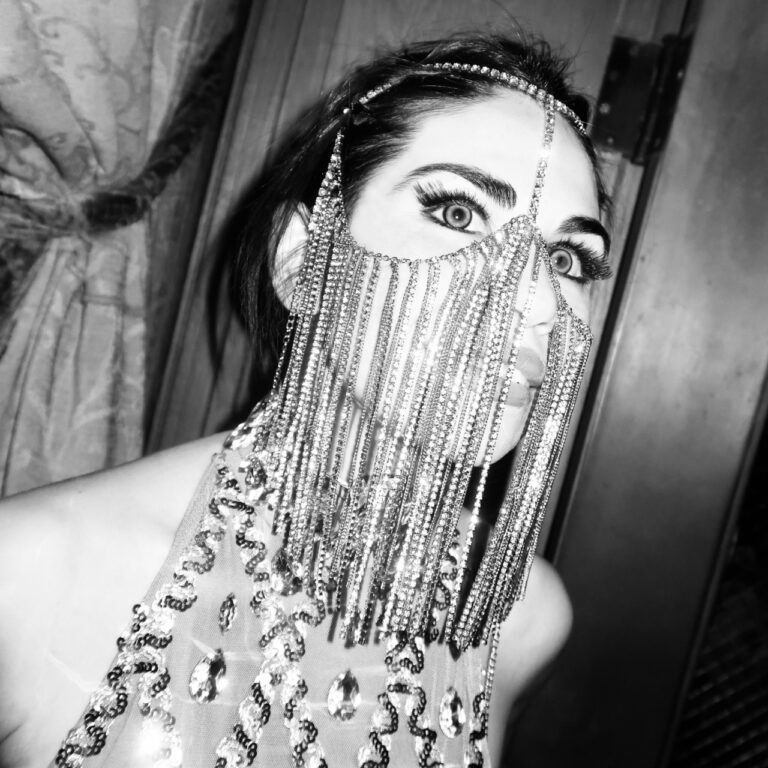
Join us for the 17th Annual Black & White Masquerade Ball.
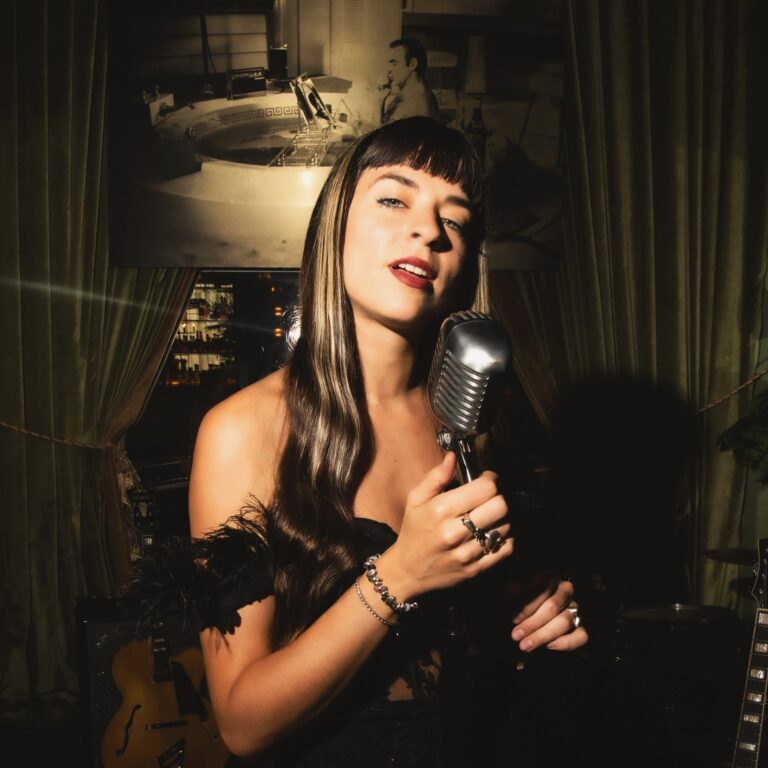
Kicking off Brazilian Jazz Sundays with Anita Donndorff.